


Welcome back to Tip Tuesday! If you spend a lot of time listening through headphones, you may have come across a setting called crossfeed. It sounds a bit technical, but the basic idea is actually simple: crossfeed is designed to make headphone listening feel a little more like listening to a traditional pair of stereo speakers in a room.
With speakers, your left ear hears sound from both the left and right speakers (and vice versa), with a tiny time delay and natural filtering caused by the distance and your own head. Headphones, by design, completely isolate each audio channel to one ear. Crossfeed gently blends a small amount of each channel into the opposite ear to recreate some of that natural interaction.
Why Do Headphones Sound Different?
One of the most noticeable differences between speakers and headphones is how the soundstage is presented. With speakers, sounds generally appear out in front of you and blend into a cohesive space. Headphones, on the other hand, can make certain elements feel like they are coming from directly beside (or even right inside) the center of your head.
This isn't necessarily a bad thing. In fact, that wide, ultra-detailed separation is one of the things people love about high-end headphones. But for some listeners, it can feel a bit unnatural or fatiguing over long sessions.
So, What Does Crossfeed Actually Do?
Think of crossfeed as gently softening the hard left-and-right divide. A small amount of the left channel is blended into the right, and vice versa, often paired with a slight high-frequency filter and delay to mimic how sound waves naturally travel around the human head.
The result is a more centred, speaker-like presentation where the music feels like it's unfolding in front of you rather than trapped inside your ears. The effect is usually subtle; a good implementation shouldn’t muddle your music or destroy the stereo image, but rather make the overall presentation feel more relaxed.
When Is Crossfeed Most Useful?
Crossfeed shines brightest with older stereo recordings—particularly from the 1960s and 1970s. In the early days of stereo mixing, engineers would hard-pan instruments entirely to the far left or far right (think vocals in one ear and drums in the other). Through speakers, your room blends this together naturally. Through headphones, it can feel jarring. Crossfeed smooths those aggressive separation extremes out.
That said, it’s not a universal fix. Modern music is often mixed specifically with headphones and earbud playback in mind, and many listeners simply prefer the wide, uncompressed separation of a standard headphone setup.
Do You Need It?
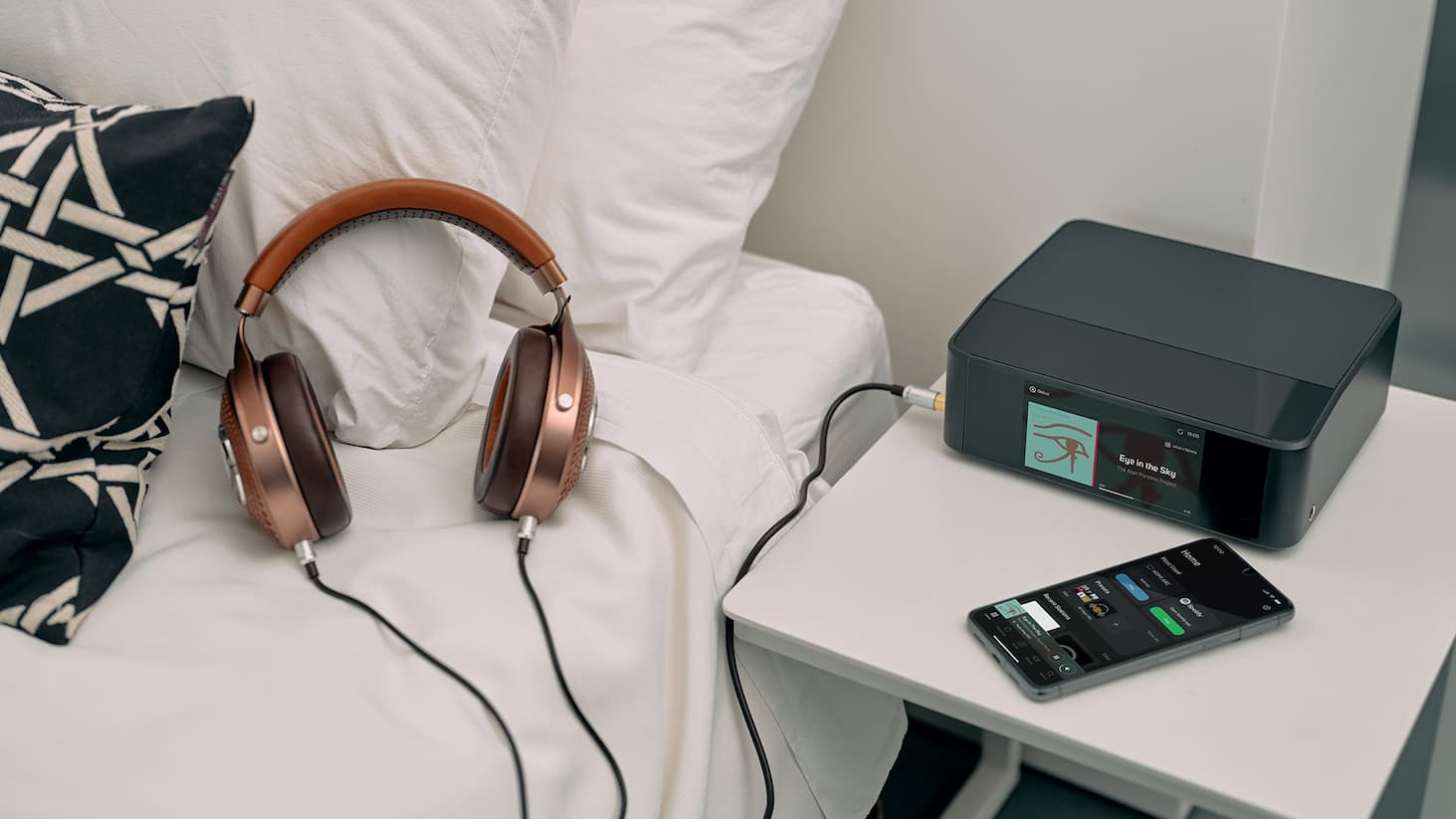
Probably not. Crossfeed isn't an essential feature or a mandatory upgrade. It’s simply another tool in your audio toolbox. Some dedicated headphone amplifiers and DACs build it right into the hardware, while software platforms like Roon offer it via DSP.
If your current headphone setup already sounds comfortable and natural to you, there's no reason to force a change. But if you've ever felt that headphone listening is a bit too wide, disjointed, or tiring over long stretches, crossfeed is well worth toggling on to see how you like it.
Give Your Ears the Final Say
Audio is full of niche features that can seem intimidating at first, but crossfeed is a great example of something worth exploring without overthinking it. It won't magically rewrite the mix of your favourite tracks, but for some listeners, it adds a much more natural, room-like dimension to the music.
The best approach is simple: try it, compare it, and decide what sounds best to your ears. After all, the best setting on any system is the one that keeps you listening.
Thanks for spending a few minutes with this week's Tip Tuesday. Until next time, happy listening!


Commentaires (0)
Il n'y a pas de commentaires pour cet article. Soyez le premier à laisser un message !